
Mapping Identity, Biology, and Art through the Unresolved Form
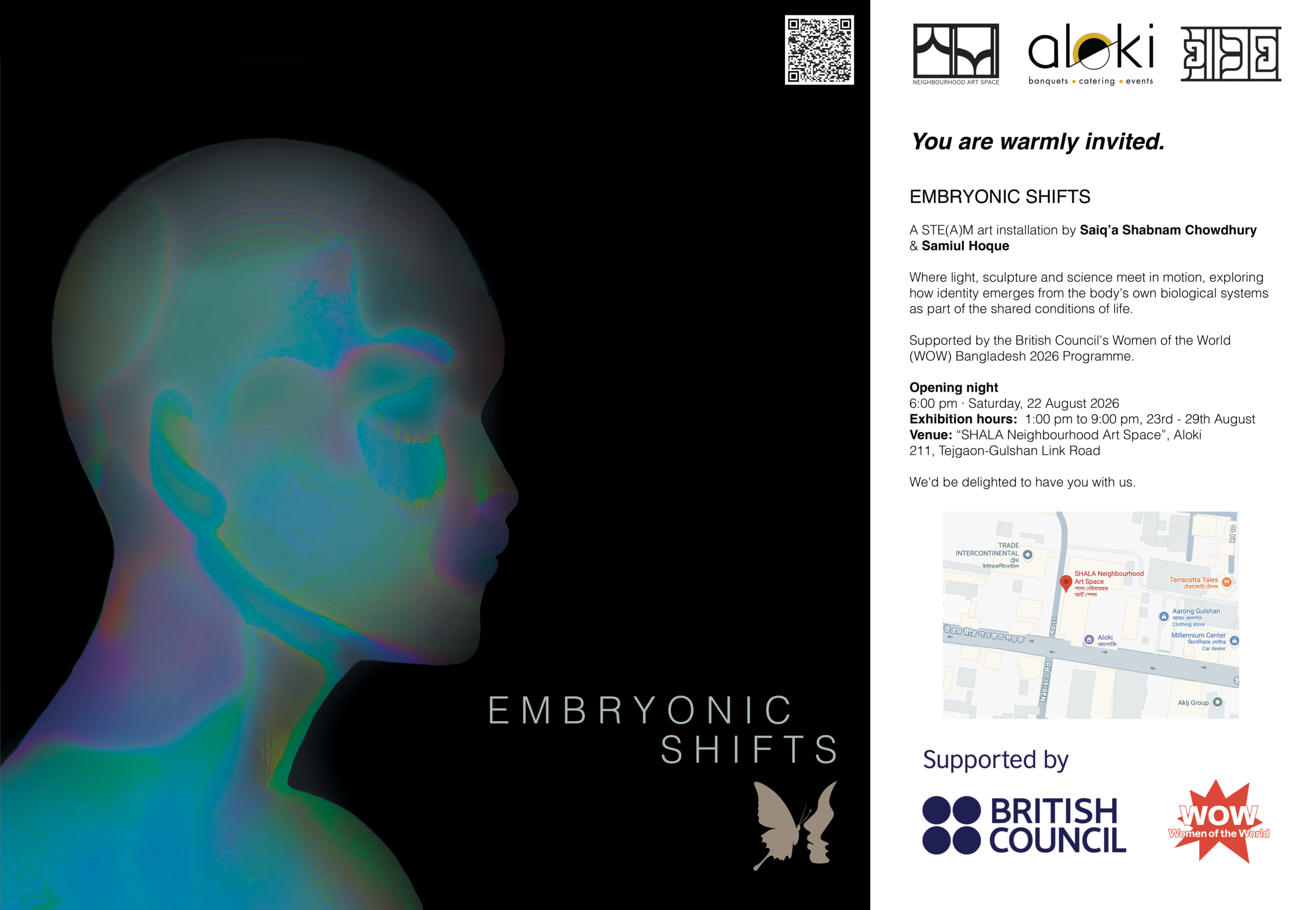
A STE(A)M project that combines strobing lights, sculpture and mechanics to create the illusion of life.
Supported by the British Council through the WOW (Women of the World) Bangladesh 2026 programme, the initiative empowers female artists to drive meaningful cultural dialogue.
Persistence of Vision at the core
Persistence of vision is the optical phenomenon where the human retina continues to hold an image for a fraction of a second (roughly one-tenth of a second) after the light source is removed.
The Artistic Metaphor: In multimedia installations like Embryonic Shifts (Rupantor), PoV bridges science and art. Beyond its technical role in driving optical illusions via mechanical zoetropes, it serves as a profound metaphor for memory, cultural continuity, and the persistence of identity. It demonstrates how the past lingers in our perception just as biological and historical traits echo through generations.
The Scientific Principle: Historically believed to be purely a delay in retinal processing (though modern science recognizes a significant role played by the brain’s visual cortex), this mechanism allows rapid sequences of still images to blend together into seamless motion, creating an illusion of inside the brain. This is the core science behind film, animation and motion pictures.
Art, Science and Engineering collaborates…
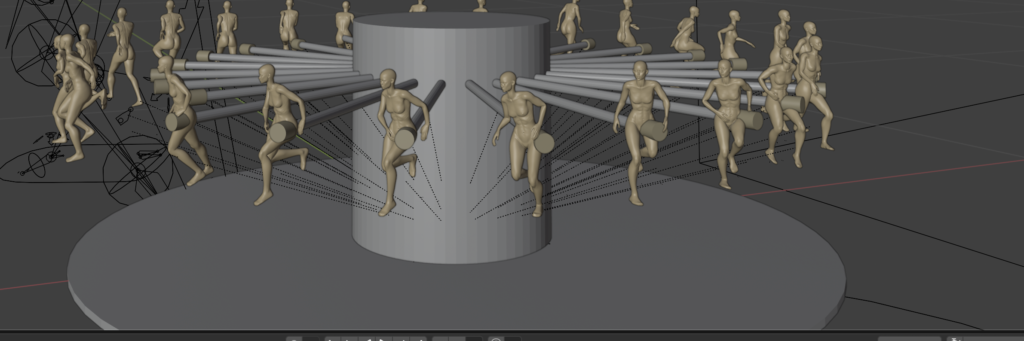
At the core of the exhibit is a large-scale, rotating mechanical zoetrope. By fusing flickering light, motion, mechanics, and probability, the installation uses early animation principles to give dynamic, breathing form to microscopic cellular processes and embryonic development.
Community-Centric Co-Creation
The foundation of Embryonic Shifts (Rupantor) extends far beyond the studio, drawing vital energy from intensive community engagement sessions with youths in Korail.
By integrating local voices, perspectives, and lived experiences into the developmental phase, the project ensures that high-level scientific and artistic concepts remain grounded in human connection, making the exploration of biology and identity a truly shared community narrative.
Art as an Investigative Science
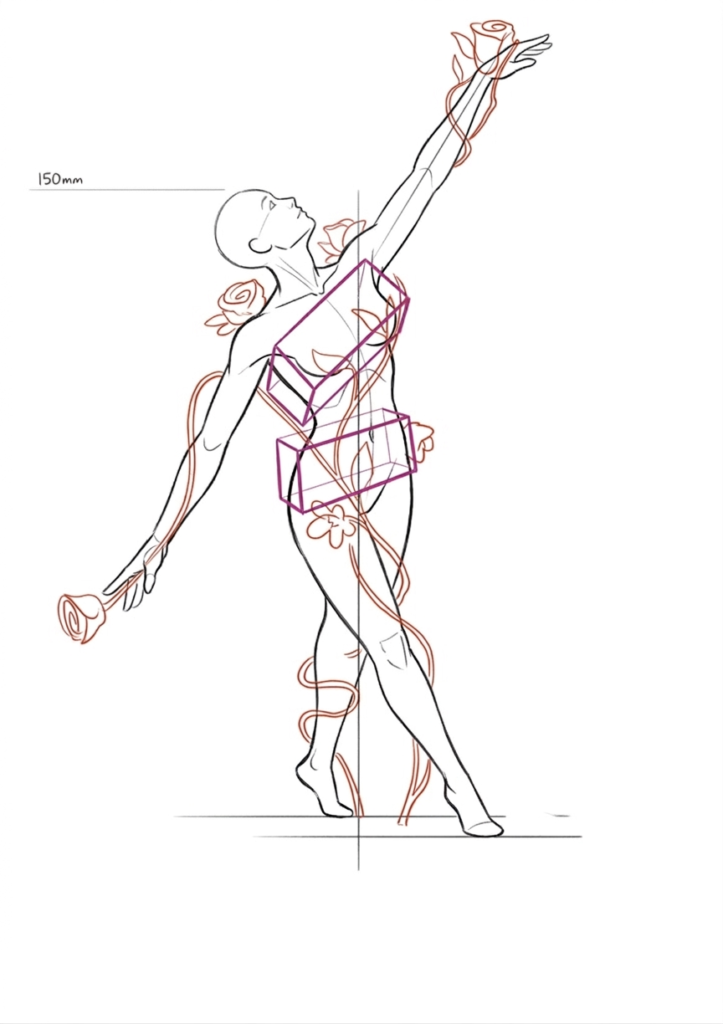
Rather than hiding behind dry academic jargon, the project harnesses imaginative frameworks, speculative visual design, and narrative art as vehicles to make rigorous, peer-reviewed scientific discovery accessible and deeply wondrous.
By blending creative fiction and animation with biological data, the installation challenges rigid preconceptions. It proves that imaginative storytelling can effectively communicate concrete scientific truths, fostering a culture of curiosity, education, and empathy.
“Can gender be represented as an outcome of biology instead of a social or political debate?”
Very special thanks to PARAA, MACHAN, SHALA neighbourhood art space and ALOKI for contributing to the successful execution of this project.